Welcome to the Educators Realty Blog, your trusted source for expert real estate insights across Long Island, Nassau, Queens, and Suffolk County. We cut through the noise with data-driven market updates, essential guides for first-time buyers, and reliable strategies for selling your home. Get the educational edge you need to master the Long Island housing market.

Dec. 6, 2023

Nassau County, New York Real Estate Market Update - November 2023

The Nassau County real estate market is still in strong seller market territory.


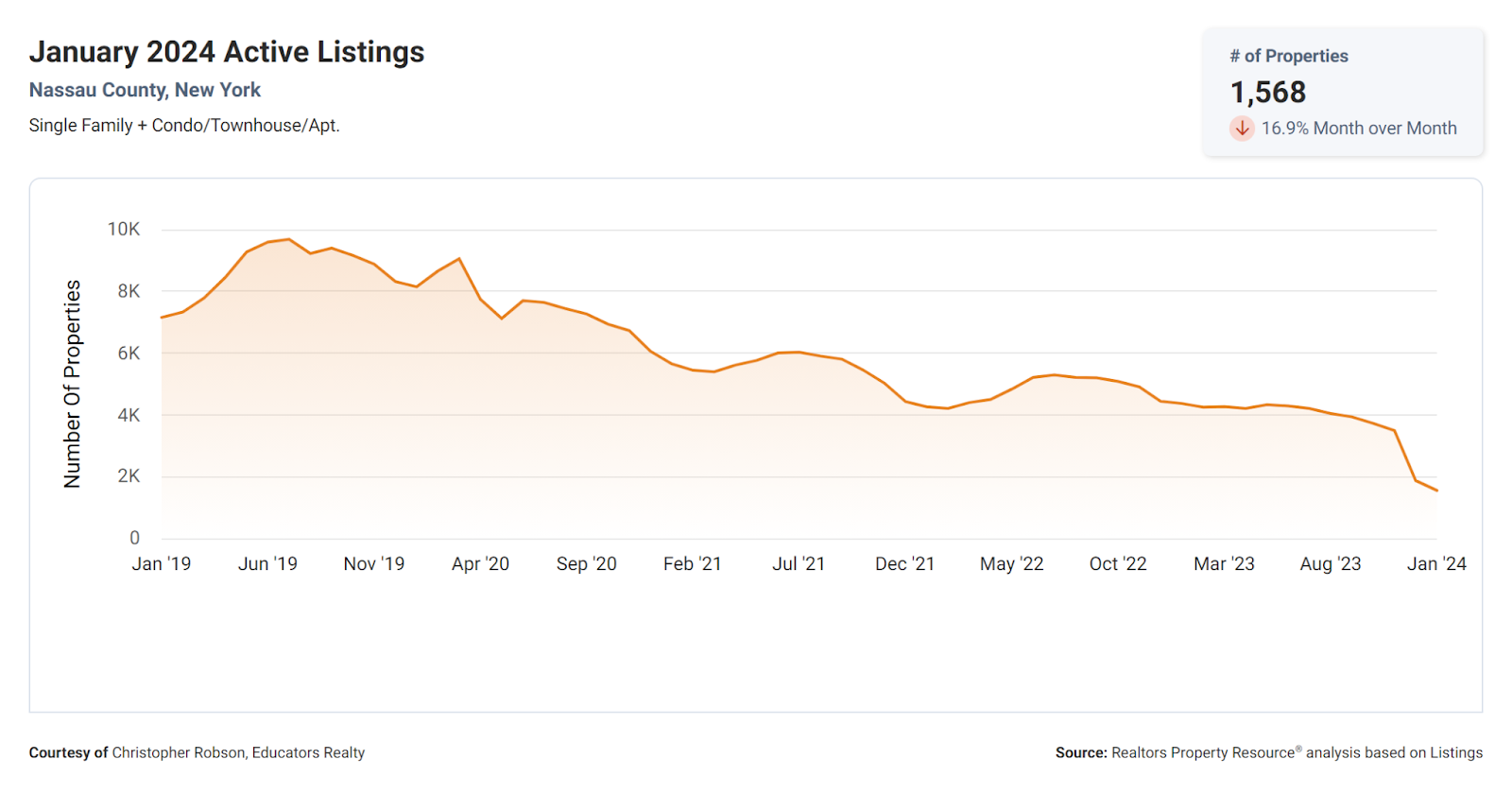
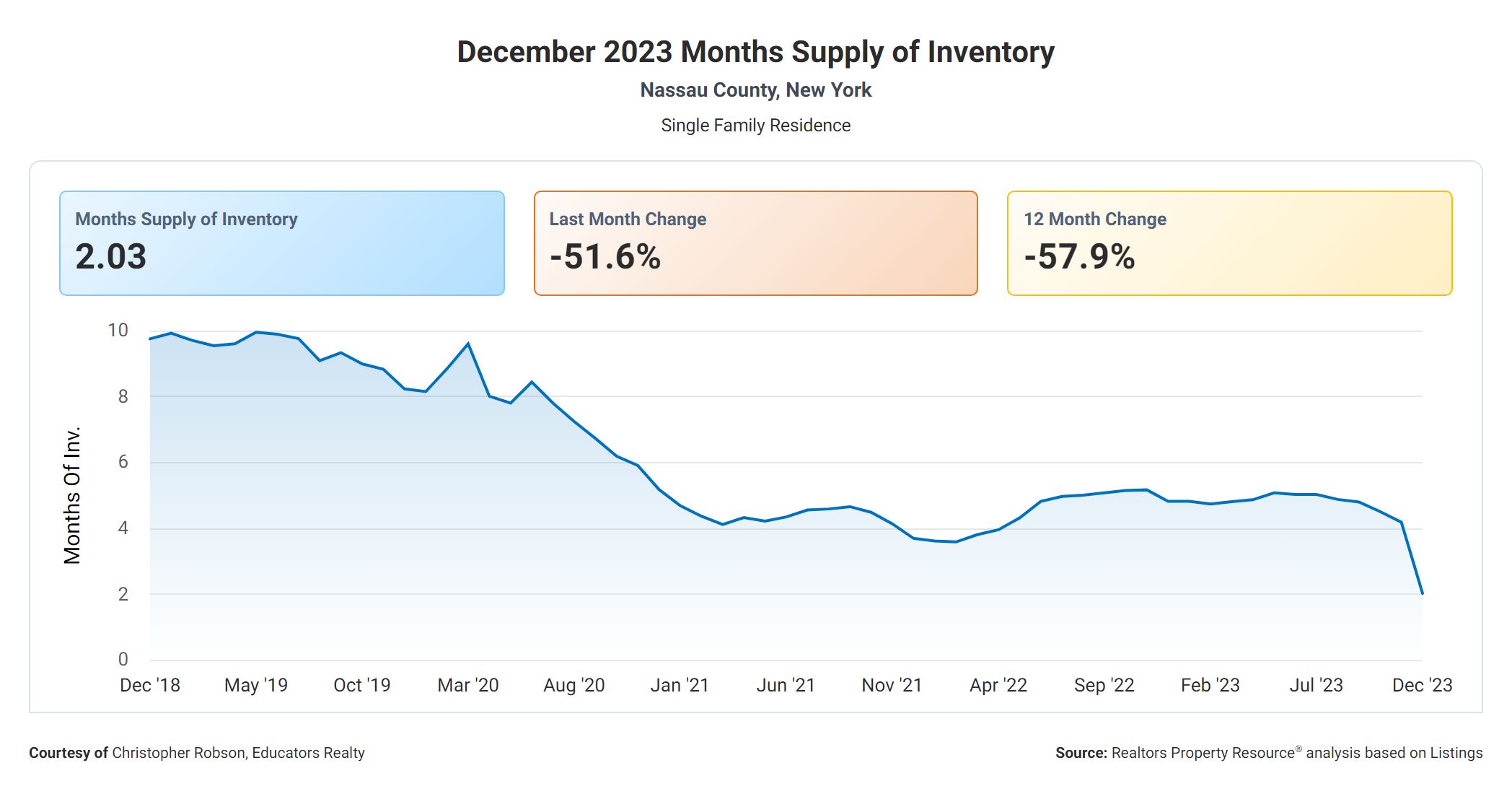
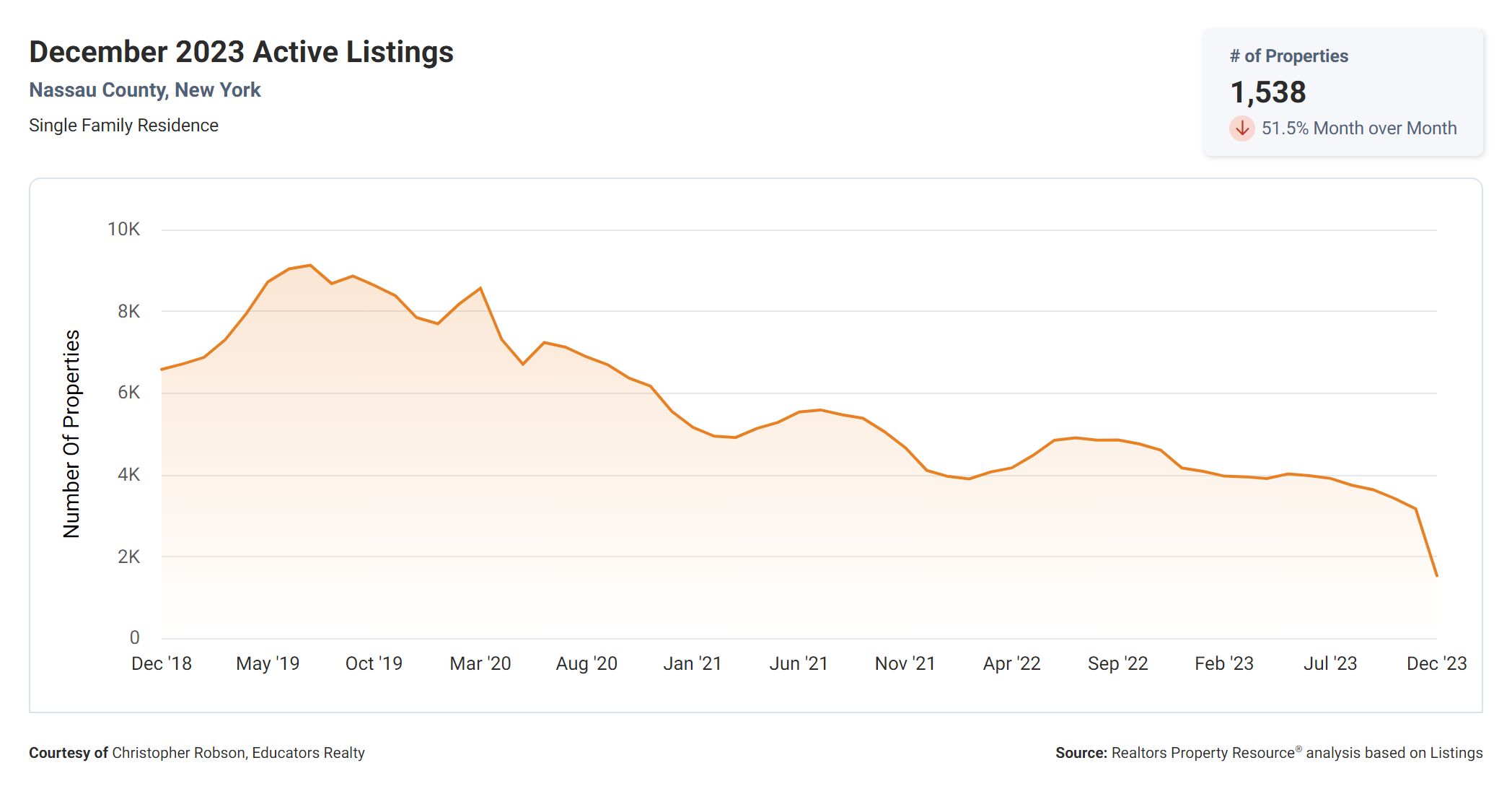
Limited Supply and High Demand: With a low 2.29 absorption rate (Months Supply of Inventory), the current market in Nassau County is characterized by a scarcity of available homes and a strong demand from buyers despite the 30 year fixed interest rate remaining in the high 7% range. Number of Homes For Sale in Nassau County November 2023

Rapidly Decreasing Inventory
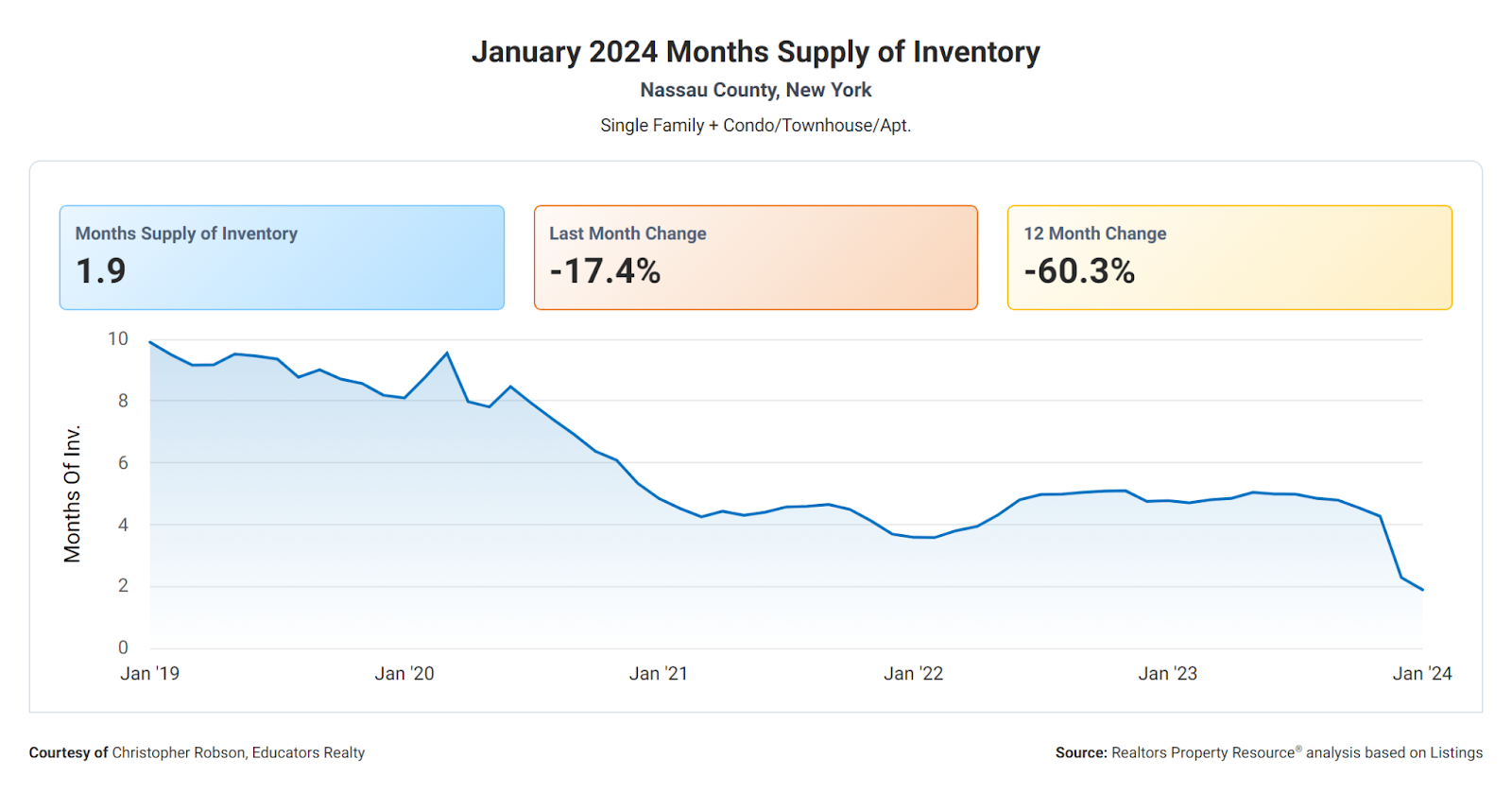
: Over the past year, the Months Supply of Inventory has plummeted by a significant -40.36%. This trend has more than offset the lowered demand resulting from the higher interest rates. Nassau County Months Supply of Housing Inventory November 2023


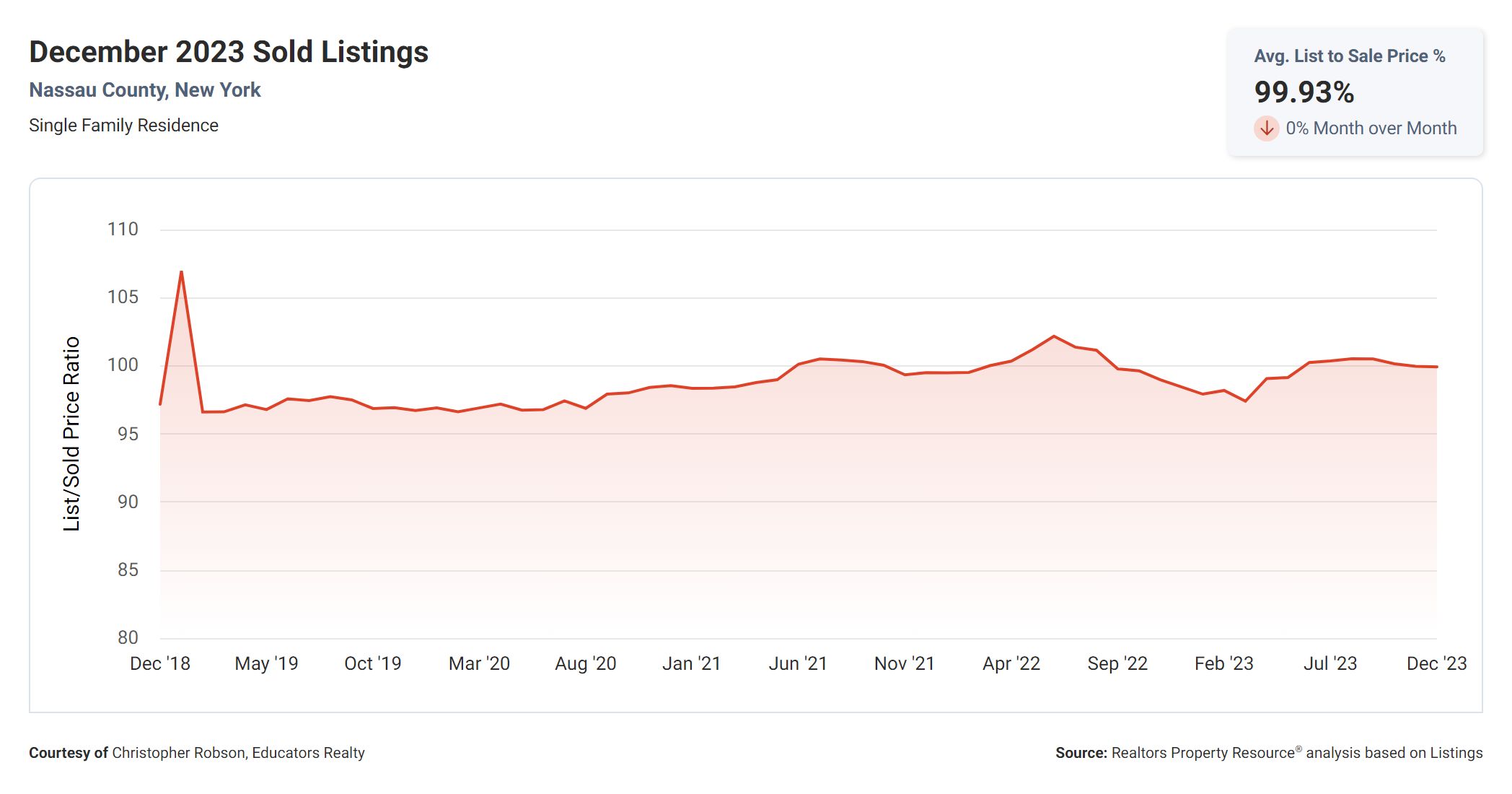
Impressive List to Sold Price Percentage
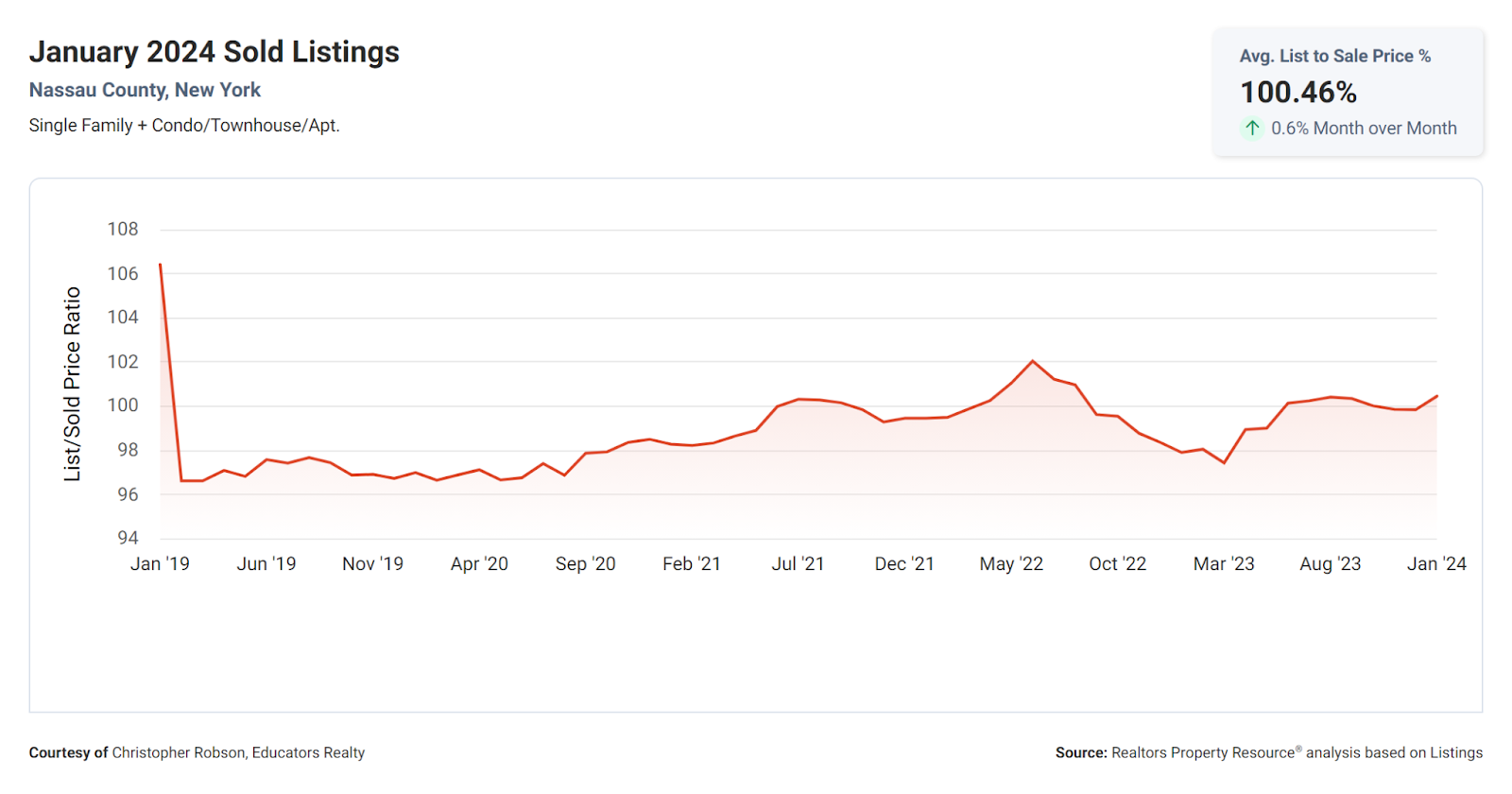
: Sellers are still receiving an impressive 99.9% of their asking price, showcasing a robust seller's market and strong negotiating power for the seller. A properly priced home in most areas of Nassau County should result in multiple offers.

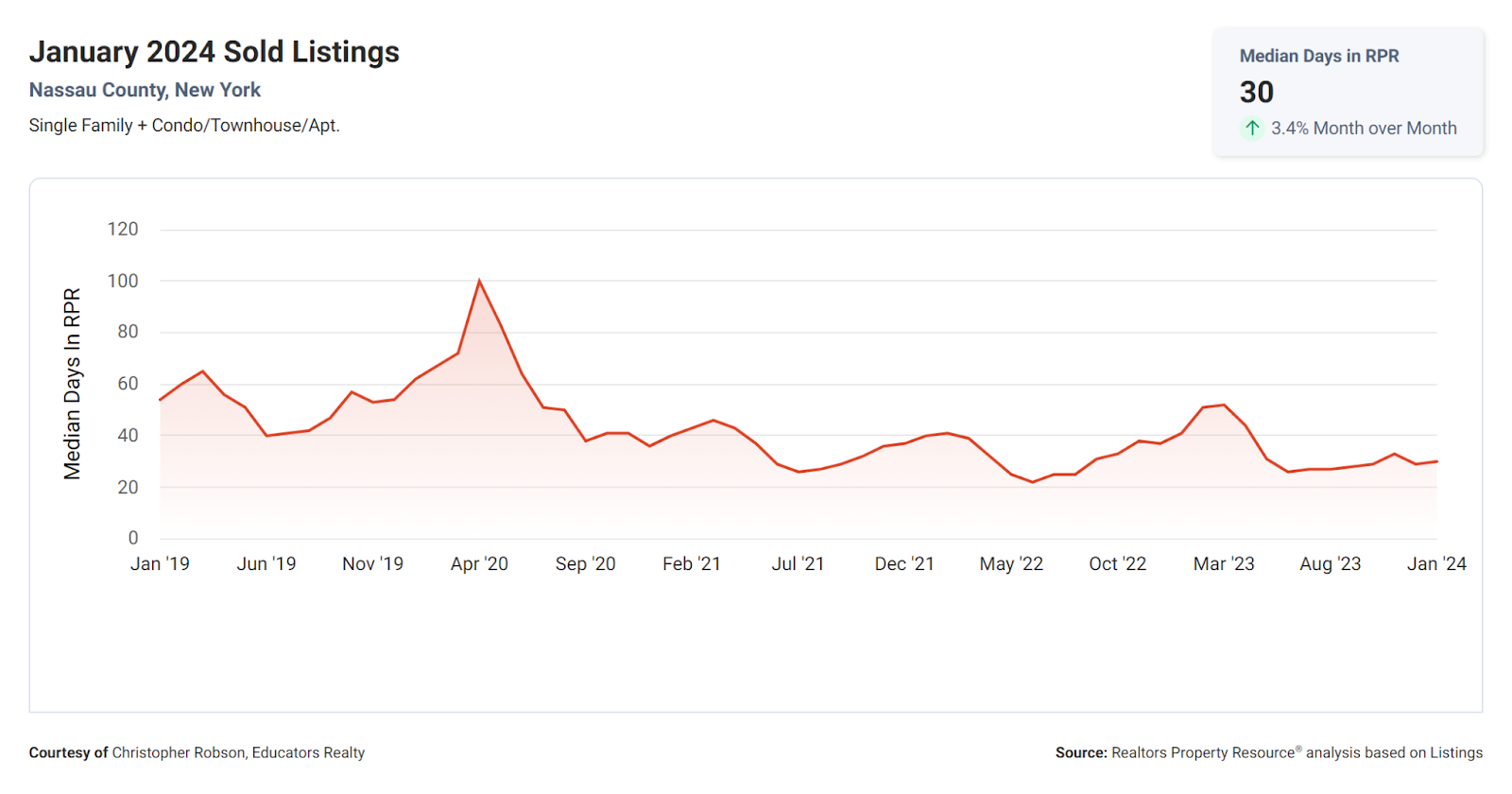
Quick Sales: Homes in Nassau County are selling swiftly, with a median of just 32 days on the market. Buyers still need to act fast if they wish to submit an offer on a home they like.

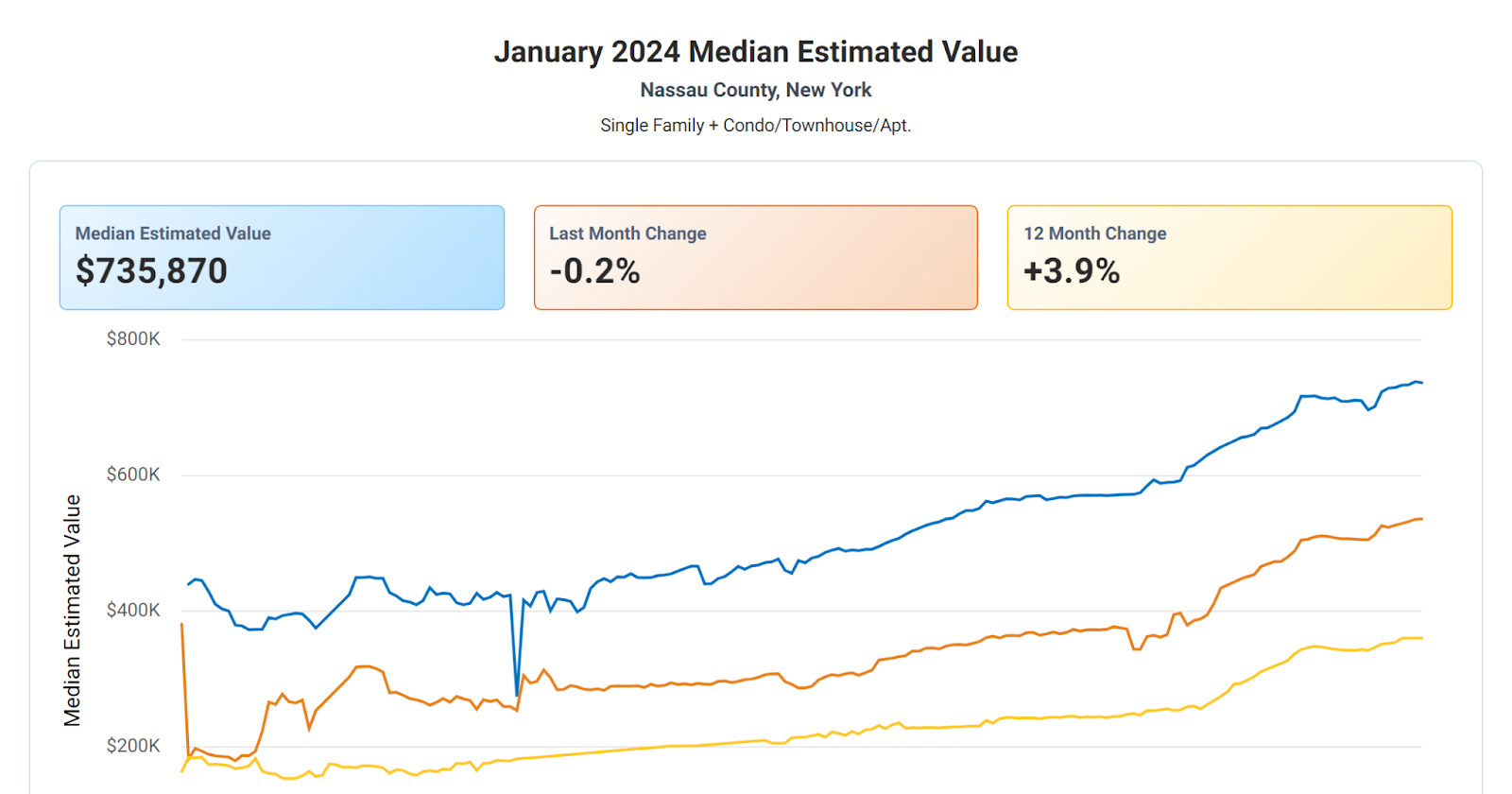
Desirable Properties: The median sold price in Nassau County is currently $725,000, highlighting the value and desirability of properties in this area.Nassu County Home Sales Price Median Sales Price November 2023


Looking to buy or sell in Nassau County? These market trends indicate a dynamic and competitive real estate landscape. As an experienced REALTORS®, we can provide expert guidance to help you achieve your goals.

By: Christopher Robson

#NassauCountyRealEstate #MarketTrends #EducatorsRealty
#Nassaucountyhousingprices #Nassauhomevalues


Dec. 1, 2023

Meet the Broker, Christopher Robson

Posted in General
Nov. 6, 2023

October 2023 Suffolk County Real Estate Market Report


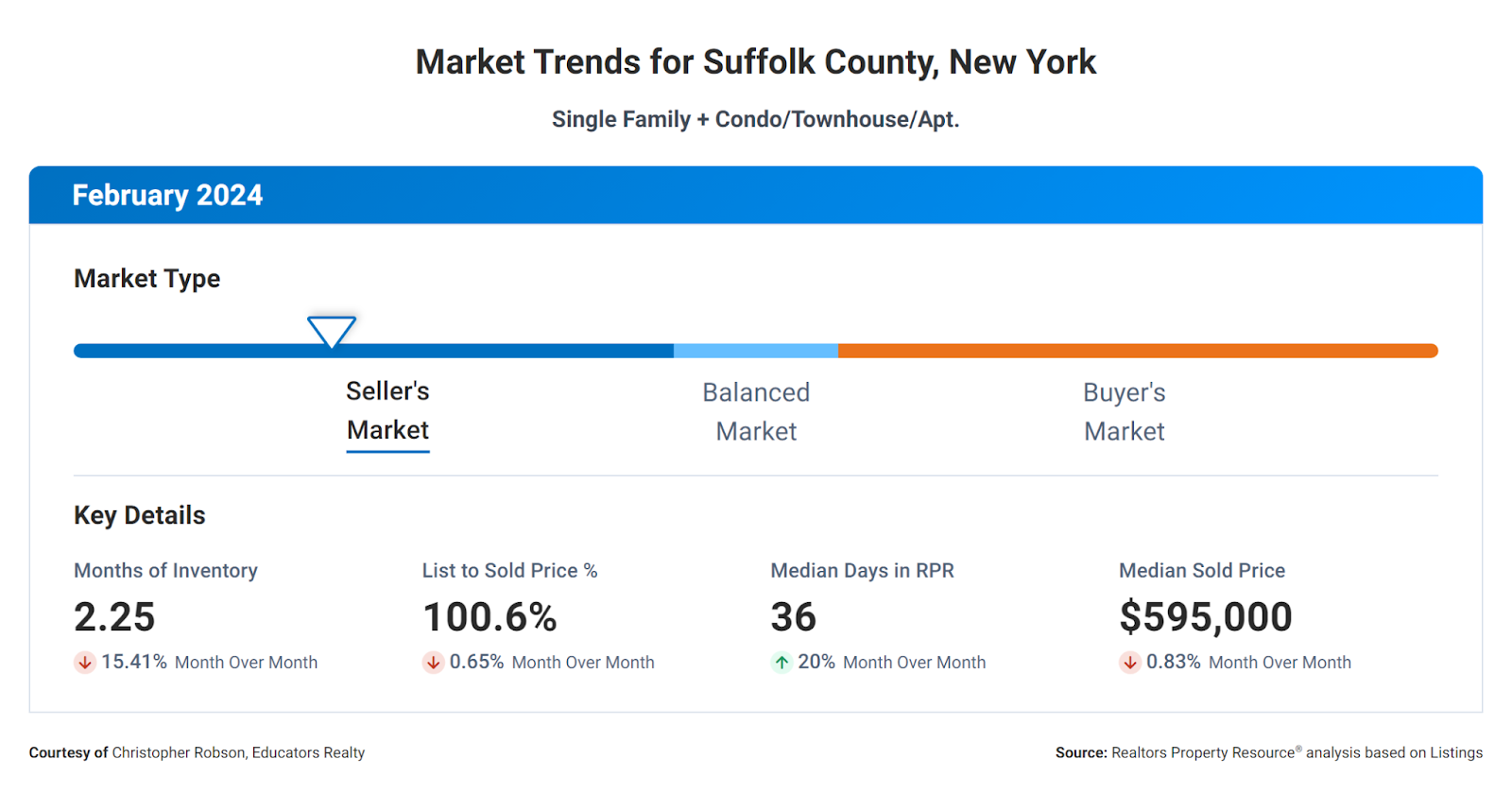
The Suffolk County real estate market continues to thrive in a solid seller territory despite the persistently high interest rates.

While the 30-year fixed mortgage rates remain in the high range of 7%, Suffolk County home prices maintain their steady ascent. Although the rate of increase has slightly decreased, the scarcity of inventory continues to impact the market significantly.

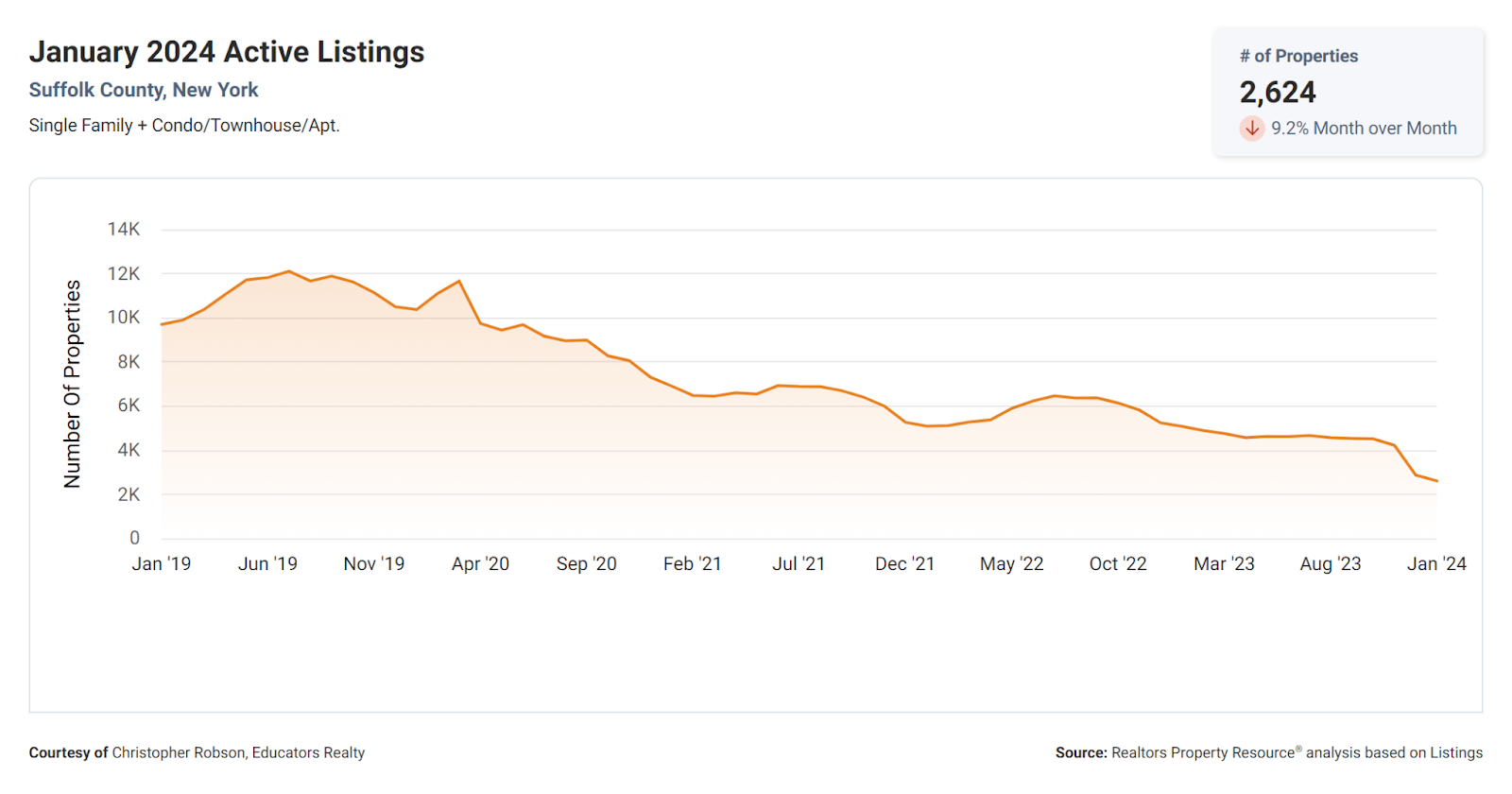
As of October 2023, there were only 3153 homes available for sale throughout Suffolk County. To put this in perspective, in October 2019, there were over 11,000 homes listed for sale. The chart below is a history of Suffolk active listings dating back to October 2018.  Over the course of the past year, the available inventory of homes in Suffolk County has remarkably decreased by -25.91%. 

Suffolk County Properties for Sale (Active Listings) 

Suffolk County Homes For Sale

The "Months Supply of Inventory" in Suffolk County, also known as the absorption rate, currently stands at 2.86. This metric provides an indication of the length of time it would take to sell all the homes on the market without considering new listings. A lower number suggests a tighter market with high demand and limited supply. A market equilibrium is typically considered to have a 5 to 6 month inventory. Anything higher indicates a buyers market, while anything lower points to a sellers market.  Consequently, although interest rates may have deterred some buyers, the diminishing inventory in Suffolk County more than compensates for the reduction in demand.

October 2023 Suffolk County Months Supply of Inventory

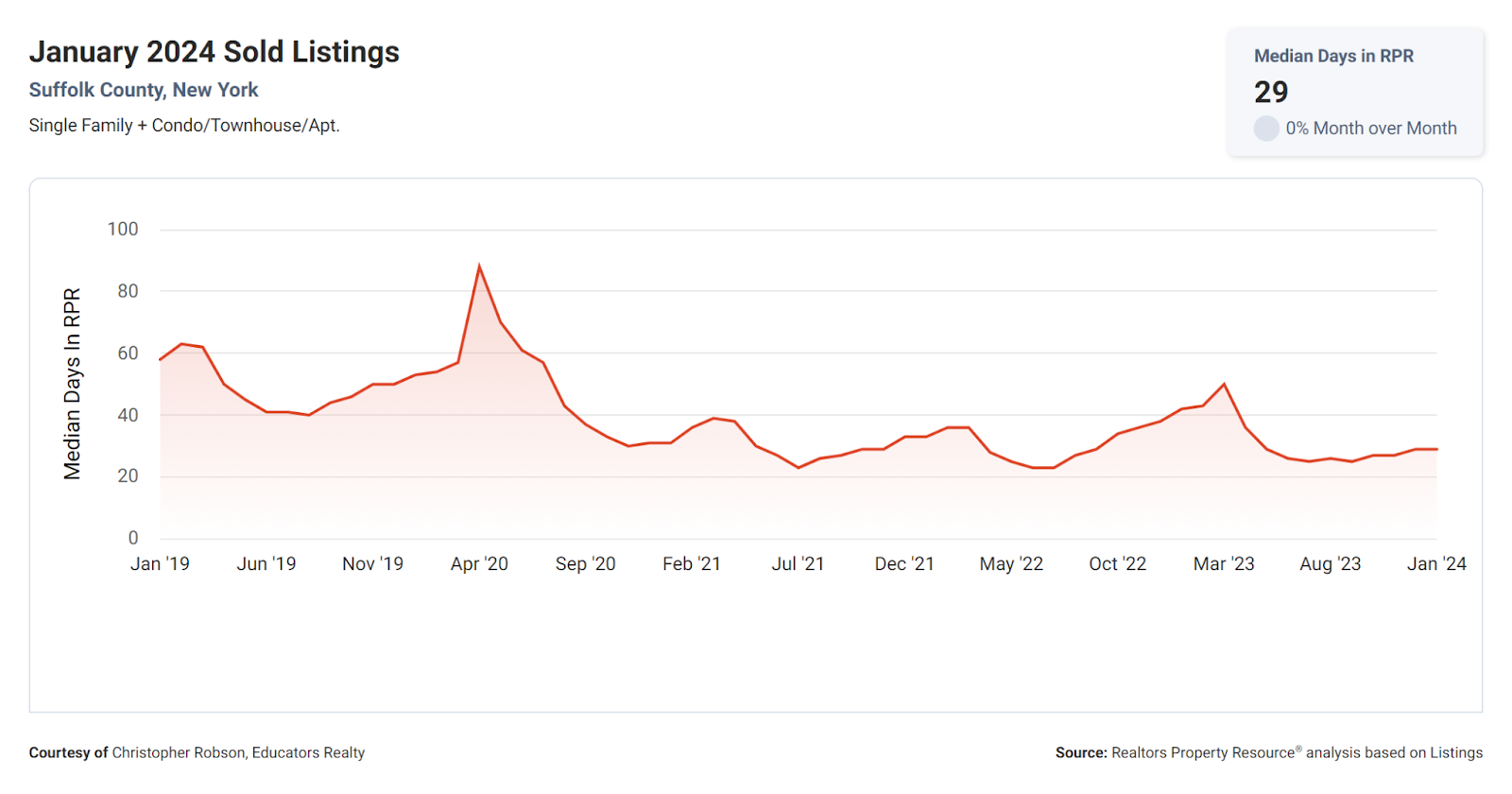
Currently, the median days that Suffolk County homes spend on the market is an impressively short 27 days. It is evident that Suffolk homes are selling swiftly.

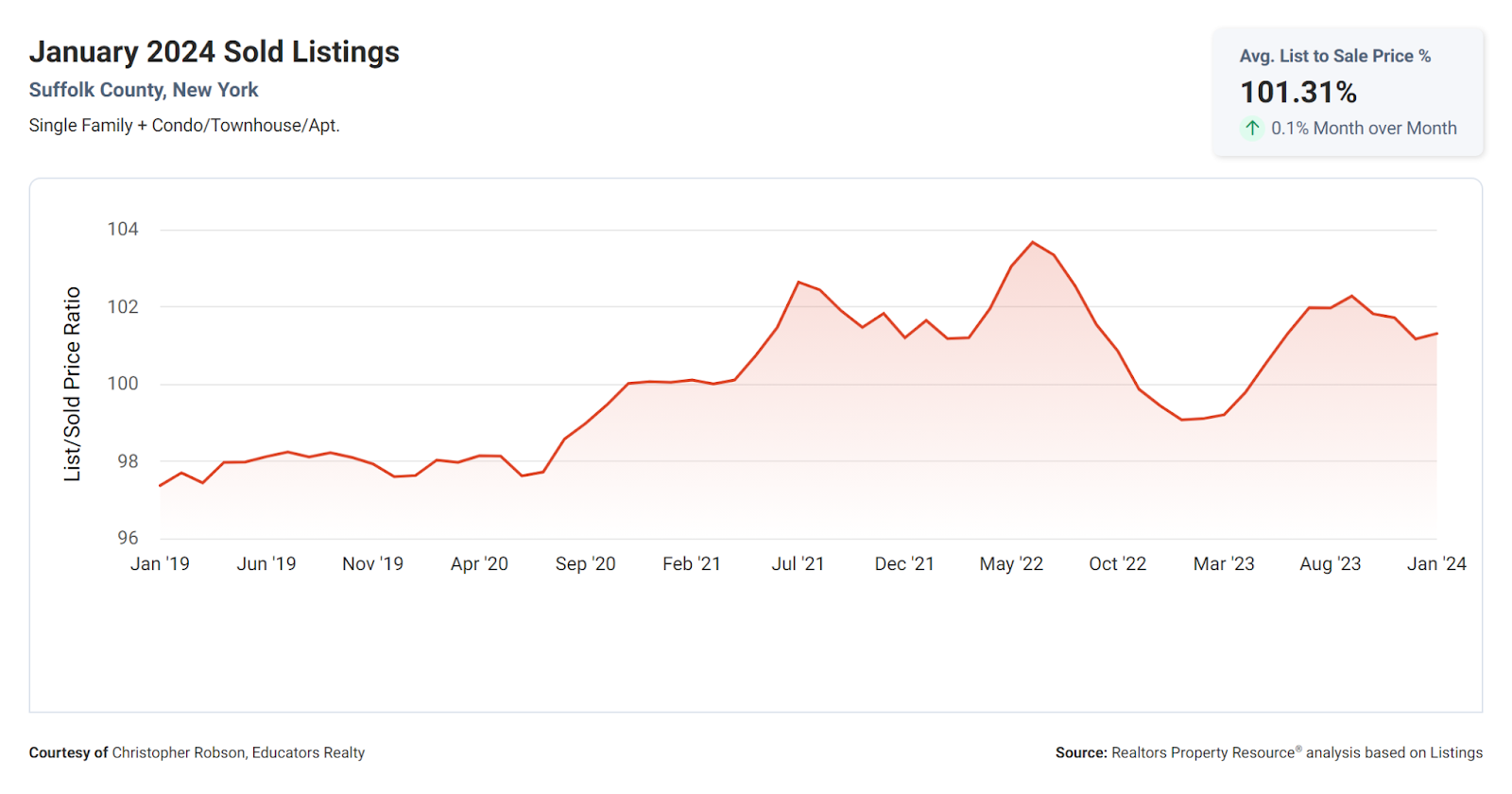
Furthermore, the Suffolk County list-to-sold price percentage is 101.8%. This figure indicates whether homes, on average, are being sold at, above, or below their listed price. Presently, the aggregate listing price in Suffolk County is slightly lower than the aggregate sales price. This is an indication that many homes are still selling over the asking price as a result of a bidding war. That is not to say that all homes will sell at or above the list price, this number accounts for both overpriced and underpriced listings. 

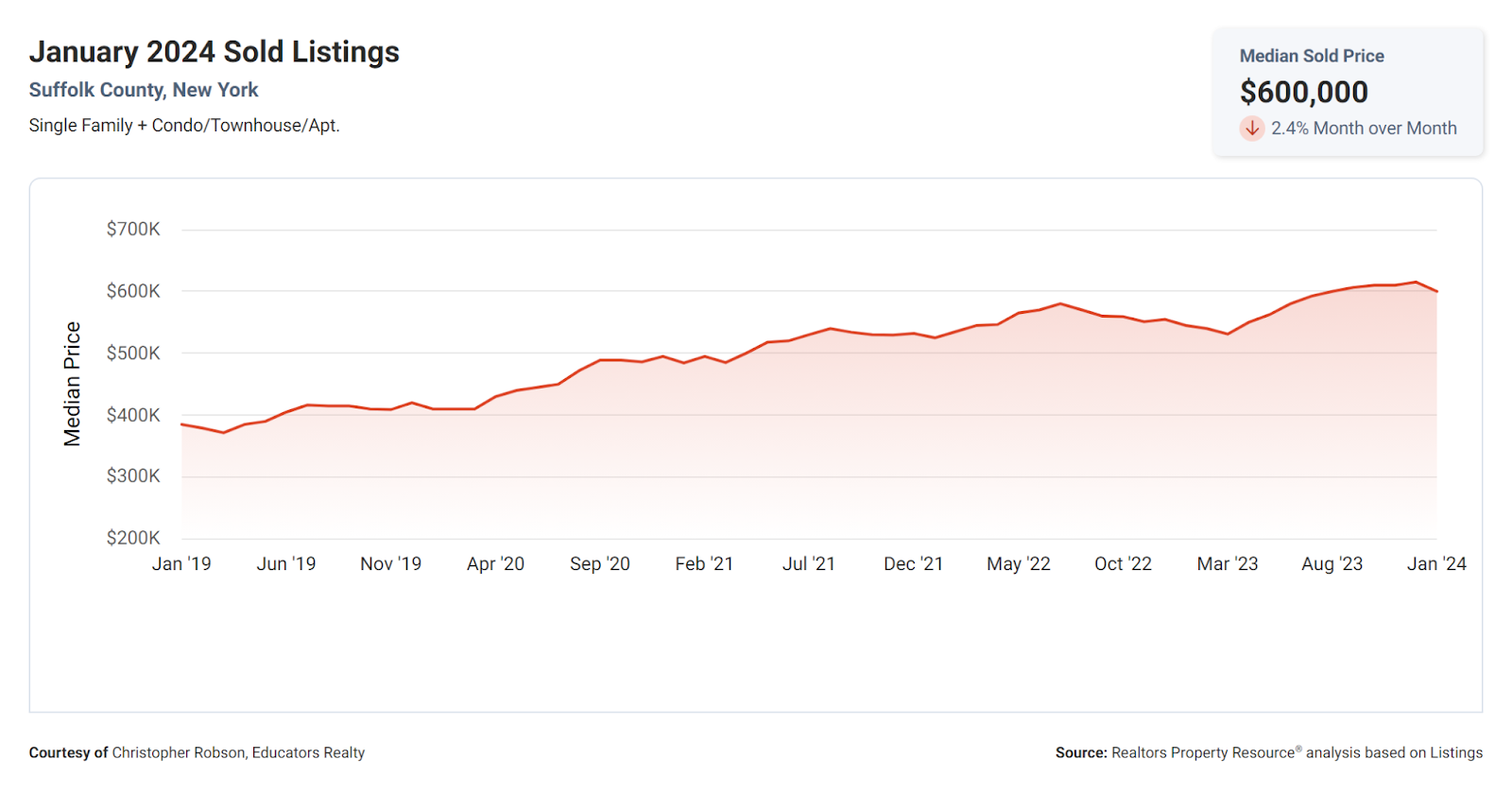
Finally, the median sold price of homes in Suffolk County is $609,000, a significant increase over last year.

Here is a snapshot of the Suffolk County real estate market for October 2024:

Suffolk County median home price: $609,000

Suffolk County average list-to-sale percentage: 101.8%

Suffolk County median days on market: 27

Suffolk County available homes for sale: 3153


Nov. 3, 2023

October 2023 Nassau County Real Estate Market Report

The Nassau County real estate market continues to thrive in a solid seller territory despite the persistently high interest rates.

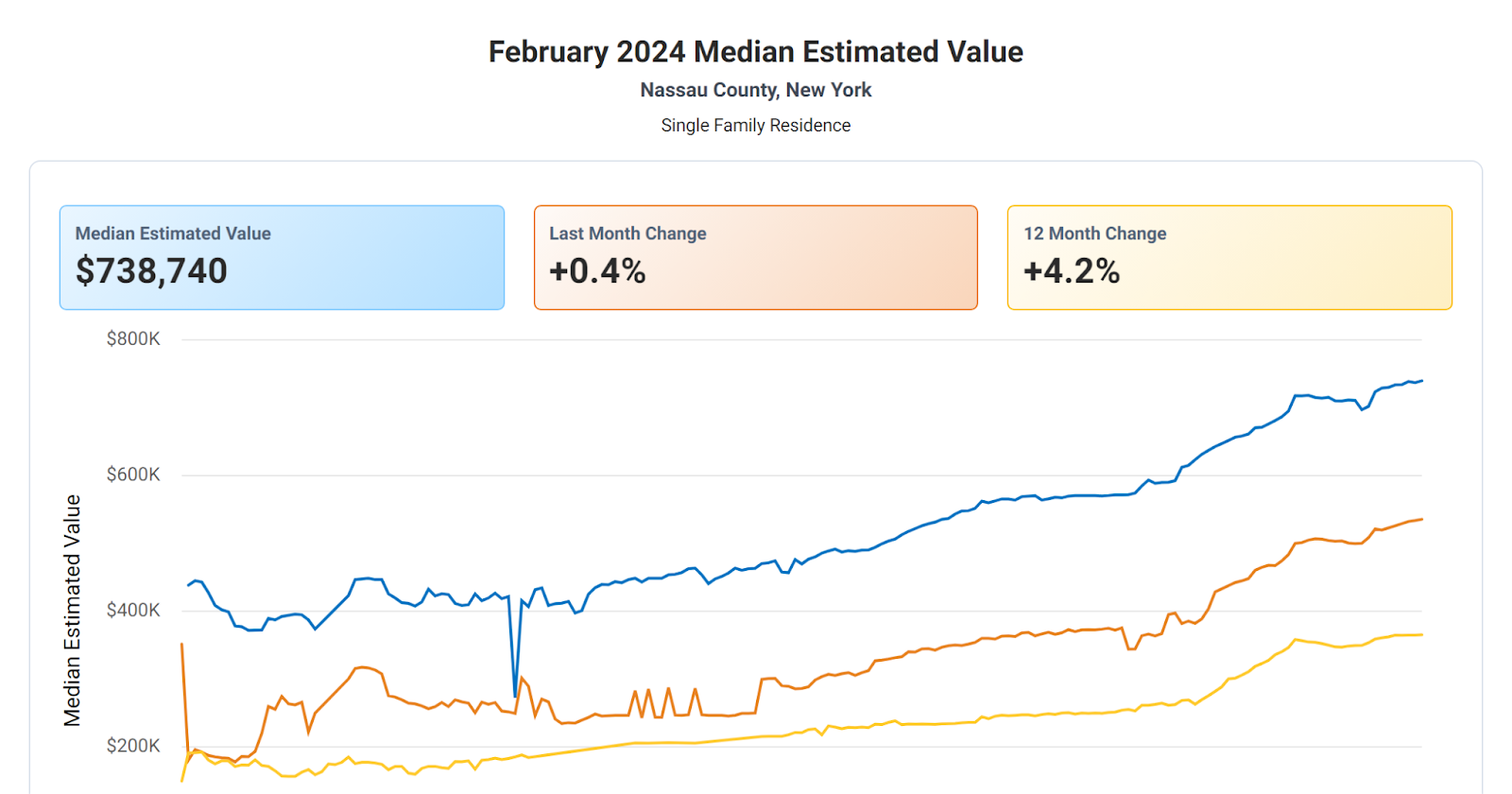
While the 30-year fixed mortgage rates remain in the high range of 7%, Nassau County home prices remain strong. Although the rate of increase has slightly decreased, the scarcity of inventory continues to impact the market significantly.

As of October 2023, there were only 2048 homes available for sale throughout Nassau County. To put this in perspective, in October 2019, there were over 8000 homes listed for sale. The chart below is a history of Nassau active listings dating back to October 2018.  Over the course of the past year, the available inventory of homes in Nassau County has remarkably decreased by -35.57%. 

Nassau County Properties for Sale (Active Listings) 

Homes currently or sale in Nassau County

The "Months Supply of Inventory" in Nassau County, also known as the absorption rate, currently stands at 2.5. This metric provides an indication of the length of time it would take to sell all the homes on the market without considering new listings. A lower number suggests a tighter market with high demand and limited supply. A market equilibrium is typically considered to have a 5 to 6 month inventory. Anything higher indicates a buyers market, while anything lower points to a sellers market.  Consequently, although interest rates may have deterred some buyers, the diminishing inventory in Nassau County more than compensates for the reduction in demand.

October 2023 Nassau County Months Supply of InventoryNassau County Homes For Sale

Currently, the median days that Nassau County homes spend on the market is an impressively short 29 days. It is evident that Nassau homes are selling swiftly.

Furthermore, the Nassau County list-to-sold price percentage hovers just below 100%. This figure indicates whether homes, on average, are being sold at, above, or below their listed price. Presently, the aggregate listing price in Nassau County is in almost perfect alignment with the aggregate sale price. That is not to say that all homes will sell at the list price, this number accounts for overpriced and underpriced listings. 

Finally, the median sold price of homes in Nassau County is $744,000. Although there has been a slight decline in this number, it can likely be attributed to seasonal trends.

October 2023 Nassau County Sold Home Price
Nassau County Sold Homes

Here is a snapshot of the Nassau County real estate market for November 2024:

Nassau County median home price: $744,000

Nassau County average list-to-sale percentage: 99.98%

Nassau County median days on market: 29

Nassau County available homes for sale: 2048


Post any comments or questions you have below.

Nov. 3, 2023

Real Estate Finance: Understanding Mortgage Terms and Rates

Purchasing a home is an exciting milestone for many people. However, it can also be a daunting process, especially when it comes to figuring out how to finance your new home. With so many mortgage terms, rates, and financing options available, it can be overwhelming to know where to start. In this guide, we'll break down the basics of real estate finance to help you understand mortgage terms and rates, as well as provide tips for improving your credit score to qualify for a mortgage.

Financing Options Available to Homebuyers

Before diving into the intricacies of mortgage terms and rates, let's first take a look at the different financing options available to homebuyers. These options include:

  • Conventional Loans: These are traditional loans that are not backed by a government agency. They typically require a down payment of at least 3% and have stricter credit score and income requirements.
  • FHA Loans: Insured by the Federal Housing Administration, these loans often require a lower down payment (as low as 3.5%) and have more flexible credit score and income requirements.
  • VA Loans: Available to veterans and active-duty service members, these loans are guaranteed by the Department of Veterans Affairs and often offer competitive interest rates with no down payment required.
  • USDA Loans: These loans, backed by the US Department of Agriculture, are available for rural or suburban homebuyers who meet certain income requirements. They also do not require a down payment.
  • Private Financing: This option involves borrowing money from a private lender, such as a family member or friend, to finance your home purchase.

When considering which financing option is best for you, it's important to research each one thoroughly and consult with a financial advisor. Keep in mind that the specific terms and rates for these options may vary based on your credit score, income, and other factors.

Understanding Mortgage Terms and Rates

A mortgage is a loan used to finance the purchase of a home. The terms and rates associated with a mortgage can vary greatly, so it's important to fully understand them before signing on the dotted line.

  • Term: This refers to the length of your mortgage, typically ranging from 15 to 30 years. A longer term means lower monthly payments, but you'll end up paying more in interest over the life of the loan.
  • Interest Rate: This is the percentage of your loan amount that you will pay in interest each year. It can be fixed or adjustable, meaning it may change over time. When comparing mortgage rates, you may come across the term "annual percentage rate" or APR. This includes not just the interest rate, but also any fees and costs associated with the loan. It's important to look at both the interest rate and APR when evaluating different mortgage options.
  • Points: These are fees paid to the lender at closing in exchange for a lower interest rate. One point is equal to 1% of your loan amount.
  • Down Payment: This is the initial payment made towards the purchase price of your home. It typically ranges from 3-20% of the total cost.

Improving Your Credit Score

Your credit score plays a crucial role in determining your eligibility for a mortgage and the terms and rates you're offered. A higher credit score can mean lower interest rates and more favorable loan options. Here are some tips for improving your credit score:

  • Pay all bills on time
  • Keep credit card balances low
  • Only apply for new credit when necessary
  • Monitor your credit report for errors and dispute any inaccuracies promptly

Remember that your credit score is not the only factor lenders consider when determining your eligibility for a mortgage. Your income, debt-to-income ratio, and employment history also play a role.


Posted in Buying A Home
Oct. 23, 2023

September 2023 Suffolk County Real Estate Market Report

In Suffolk County, the median sale price for residential properties reached $595,000 in September 2023, marking an 8.2% increase from the previous year's reported price of $550,000 on the MLS. The number of closed and pending residential transactions in September 2023 were 1,136 and 1,091 respectively. This is a decrease from the previous month's 1,363 closed transactions and 1,270 pending transactions.

In the OneKey MLS Regional Area, the median sale price for closed residential properties was $630,000 in September 2023. This shows a 5% increase compared to the reported price of $600,000 in September 2022. Across the regional coverage area, there were 4,245 closed transactions and 4,240 pending transactions. These numbers indicate a decrease from the previous month's 5,344 closed transactions and 4,775 pending transactions.

The rise in mortgage rates, which have climbed over 7%, has caused potential buyers to delay their home purchase plans. Additionally, existing homeowners are hesitant to list their homes for sale because they don't want to give up their low-rate mortgages from a few years ago when rates were much lower.  It is this lack of inventory contributes to the sustained rise in home values despite the climbing interest rates.

Suffolk County, New York - Median Home Price
Suffolk County Median Home Price

Oct. 23, 2023

September 2023 Nassau County Market Report

Nassau County's housing market is looking strong, with a median sale price of $735,000 in September 2023. This represents a 5.20% increase from last year's price of $699,000. Additionally, there were 912 closed residential sales and 848 pending transactions in September 2023. Compare this to the 1,208 closed and 1,020 pending transactions the month prior.

In the wider OneKey MLS Regional Area, the median sale price was $630,000 in September 2023, marking a 5.00% increase from the previous year's price of $600,000. In terms of transactions, there were 4,245 closed sales and 4,240 pending transactions in September 2023. This is slightly lower than the 5,344 closed and 4,775 pending transactions from the month prior.

As the housing market in Nassau County evolves, the limited supply of inventory and the increase in mortgage rates have led to affordability challenges for prospective buyers.  The rise in mortgage rates, which have reached over 7%, has caused potential buyers to delay their home purchase plans. Additionally, existing homeowners are hesitant to list their homes for sale because they don't want to give up their low-rate mortgages from a few years ago when rates were much lower. Despite these challenges, the lack on inventory helps keep home prices elevated.

Nassau County, New York - Median Home Price

Nassau County Home Sales Median Price

Oct. 23, 2023

Weighing the Pros and Cons: Renting vs. Buying a Home

by Christopher Robson

One of the biggest decisions you will ever make in your life is whether to rent or buy your own home. It’s a decision that requires careful consideration, as it will affect your finances and lifestyle for many years to come. There are pros and cons to both renting and buying a home, and what is right for you may depend on your individual circumstances and goals. In this blog post, we will explore the pros and cons of renting vs. buying a home to help you make an informed decision.

Pros of Renting a Home:

Flexibility: Renting a home offers more flexibility than owning a home. You can easily move to a new place once your lease is up without worrying about the resale value of your property. This is particularly important if you are not sure about your job or if you need to move to a different city or state.

Maintenance: One of the biggest advantages of renting is that you are not responsible for maintenance and repairs. Landlords are responsible for fixing any issues that arise in the rental property. This can save you a lot of money and headaches in the long run.

Affordability: Renting is often more affordable than owning a home. You can save money on down payments, property taxes, and homeowners insurance. This allows you to allocate more money towards other expenses like travel or retirement savings.

Cons of Renting a Home:

Limited Control: When you rent a home, you are at the mercy of your landlord. You cannot make any major changes to the property without their permission. This can be frustrating if you want to personalize your living space or make upgrades to the home.

Uncertainty: When you rent a home, you don’t have the security of homeownership. Your landlord can decide not to renew your lease, or they may decide to sell the property. This can leave you scrambling to find a new place to live.

No Equity: When you rent a home, you are essentially paying someone else’s mortgage. You are not building any equity in the property, and you are not eligible for any potential appreciation in the home’s value.


Pros of Buying a Home:

Ownership: When you buy a home, you own the property. This gives you a sense of stability and security that renting cannot match. You can make any changes you want to the property without asking for someone else’s permission.

Equity: When you buy a home, you build equity in the property. Over time, your home can appreciate in value, which can provide a substantial return on your investment.

Tax Benefits: Homeownership comes with several tax benefits. For example, you can deduct the interest you pay on your mortgage from your income taxes, which can result in significant savings.

Cons of Buying a Home:

Responsibility: When you own a home, you are responsible for maintenance and repairs. This can be costly and time-consuming, especially if you have an older home.

Costs: Homeownership comes with many costs beyond the purchase price of the property. You will be responsible for property taxes, homeowners insurance, and any repairs or upgrades to the home. It’s important to factor these costs into your budget.

Less Flexibility: Owning a home ties you down to one location. You cannot easily move to a new city or state without selling your property, which can be a long and complex process.

Conclusion:

Deciding whether to rent or buy a home is not an easy decision. There are pros and cons to each, and it’s important to weigh them carefully. Before you make a decision, ask yourself what is important to you. Do you value flexibility or stability? Are you willing to take on the responsibilities of homeownership? Once you have answered these questions, you will be able to make an informed decision that is right for you.

Oct. 22, 2023

How to Buy an Investment Property

Investment properties are a popular choice for those looking to increase their wealth and diversify their portfolio. But with so many options available, it can be overwhelming to know where to start when buying an investment property. In this guide, we will walk you through the steps involved in purchasing an investment property.

Step 1: Determine your budget

Before you start browsing properties, it's important to determine how much you can afford to spend on an investment property. This will help narrow down your options and prevent you from overspending. Consider factors such as your current savings, income, and any potential sources of financing.

Step 2: Research different locations

Location is a key factor when it comes to buying an investment property. Look for areas that are in high demand and have a strong rental market. This will ensure that you can easily find tenants and generate a steady stream of income.

Step 3: Decide on the type of property

There are various types of investment properties to choose from, such as single-family homes, multi-unit buildings, or commercial properties. Each type has its own pros and cons, so it's important to carefully consider your goals and budget before making a decision.

Step 4: Find a reliable real estate agent

Working with an experienced real estate agent can make the buying process much smoother. They have access to listings, market knowledge, and negotiation skills that can help you find the right property at the best price. Additionally, an experienced agent will be familiar with local capitalization rates - they differ from area to area.

What is a capitalization rate?

A capitalization rate, also known as cap rate, is a financial metric used to evaluate the potential return on investment for a real estate property. It is calculated by dividing the net operating income (NOI) of a property by its current market value. The resulting percentage represents the expected annual return on the property, making it a useful tool for comparing different investment opportunities.

Step 5: Get pre-approved for financing

If you need financing for your investment property, it's a good idea to get pre-approved before making any offers. This will give you a better understanding of how much you can borrow and help speed up the buying process.

Step 6: Conduct thorough inspections

Before finalizing the purchase, make sure to conduct thorough inspections of the property. This includes hiring a professional home inspector to check for any potential issues or repairs that may need to be addressed before closing the deal.

Step 7: Consider additional costs

Remember to factor in additional costs such as property taxes, insurance, maintenance, and potential vacancy periods. It's important to have a realistic understanding of these expenses in order to accurately calculate your expected return on investment.

Step 8: Develop a long-term plan

Investing in real estate is a long-term commitment, so it's important to have a solid plan in place. This should include your goals for the property, potential renovations or improvements, and an exit strategy if needed.

Step 9: Stay informed about market trends

Real estate markets can be volatile and subject to changes, so it's important to stay informed about current trends and conditions. This will help you make informed decisions and adapt your strategy accordingly.

Step 10: Network with other investors

Networking with other real estate investors can be incredibly valuable. You can learn from their experiences, share insights, and potentially find opportunities for joint ventures or partnerships.

Conclusion

Investing in real estate can be a lucrative and rewarding venture, but it's important to approach it with careful planning and consideration. By following these steps, you can increase your chances of success and minimize potential risks. Remember to always do thorough research and seek professional advice before making any major investment decisions. Happy investing!

Oct. 20, 2023

First Time Home Buyer Tips

Are you planning to buy a new home? Congratulations! This is an exciting and significant milestone in your life. However, the process can also be overwhelming and stressful. To help you navigate this journey, we have compiled a list of essential tips for home buying.

Start with Your Finances

Before even looking at potential homes, it's crucial to honestly assess your financial situation and determine how much you can afford to spend on a new home. This will help narrow down your search and prevent you from falling in love with a house that is out of your budget. Additionally, discuss different financing options with your lender and real estate agent. Down payment options begin with as little as 3.5% down. If you a veteran, it is even less!

Get Pre-Approved for a Mortgage

Once you have an idea of your budget, it's essential to get pre-approved for a mortgage. This will give you an idea of the interest rate and the amount you can borrow from a lender. It will be necessary to gat a pre-approval in order to submit an offer, so you might as well get one before looking at homes. After you receive your pre-approval do not take any action that may impact your ability to qualify for a loan.

Location, Location, Location

When looking for a new home, location is everything. Consider factors like proximity to work, schools, public transportation, and amenities when deciding on an area. It's also essential to research the future development plans for the neighborhood to ensure it aligns with your long-term goals. On Long Island, the school district the home is located in is one of the most important factors in determining value.

Work with a Professional Real Estate Agent

Navigating the home buying process can be overwhelming, especially for first-time buyers. Working with an experienced real estate agent can make a world of difference. One of our experienced agents will guide you through every step and help you find the perfect home that meets your needs and budget. It is important to choose an agent you trust and you work well with, you may be spending a substantial amount of time home shopping with them.

Make a List of Must-Have vs. Nice-to-Have Features

When viewing potential homes, it's crucial to have a list of must-have features versus nice-to-have. This will help you narrow down your options and prioritize what is most important to you. It also helps to take notes and photos during viewings to keep track of each property's features.

Don't Forget About Additional Expenses

When budgeting for a new home, it's essential to consider additional expenses beyond the purchase price. These can include closing costs, moving costs, and potential repairs or renovations. Make sure to factor in these expenses when determining your overall budget. While many factors are at play, closing costs on Long Island can be as high as 7%.

Be Prepared to Act Quickly

In today's competitive market, homes can sell quickly. It's crucial to be prepared to act fast when you find a home that meets your criteria. Have all necessary documents and financing in order, so you are ready to make an offer when the time comes. Additionally, a home that seems to good to be true at its asking price probably is. Many homes are still selling over their asking price.

Final Thoughts

Buying a home is an exciting and significant decision, but it can also be a complex process. With these tips in mind, you can navigate the home buying process with confidence and find the perfect home that aligns with your long-term goals. Remember to be patient and work closely with your real estate agent to ensure a smooth and successful experience. So, take your time, do your research, and trust the process – your dream home is waiting for you! Happy house hunting!

Posted in Buying A Home